Nucleadyn vs filler og Profhilo, hva er forskjellen?
Nucleadyn vs filler og Profhilo, hva er forskjellen?
Nucleadyn er en relativt ny behandling i Norge, og vi får mange spørsmål om hva det er og hva som skiller det fra eksisterende behandlinger som for eksempel Profhilo og filler behandlinger.
Nucledyn er en såkalt biostimulator som består av polynukleotider. Produktet er en viskoelastisk absorberbar gel som injiseres med forskjellige teknikker i huden. Nucleadyn gir hudforyngelse og har tre forskjellige produkter med ulike effekter og for ulike behov. Den er designet for å hjelpe cellene med å holde på vann, forbedre hudens elastisitet, og hjelpe til med å forebygge rynker.
Behandling med Nucleadyn er en innovativ og effektiv måte å gjenopprette hudens fasthet og elastisitet på, og sikrer en sunn hud som er beskyttet mot frie radikaler og celleskader. Nucleadyn trekker til seg stamceller til behandlingsområdet, gir et løft og virker foryngende (anti-age) ved å stimulere fibroblastcellene til å danne mer kollagen type 1.
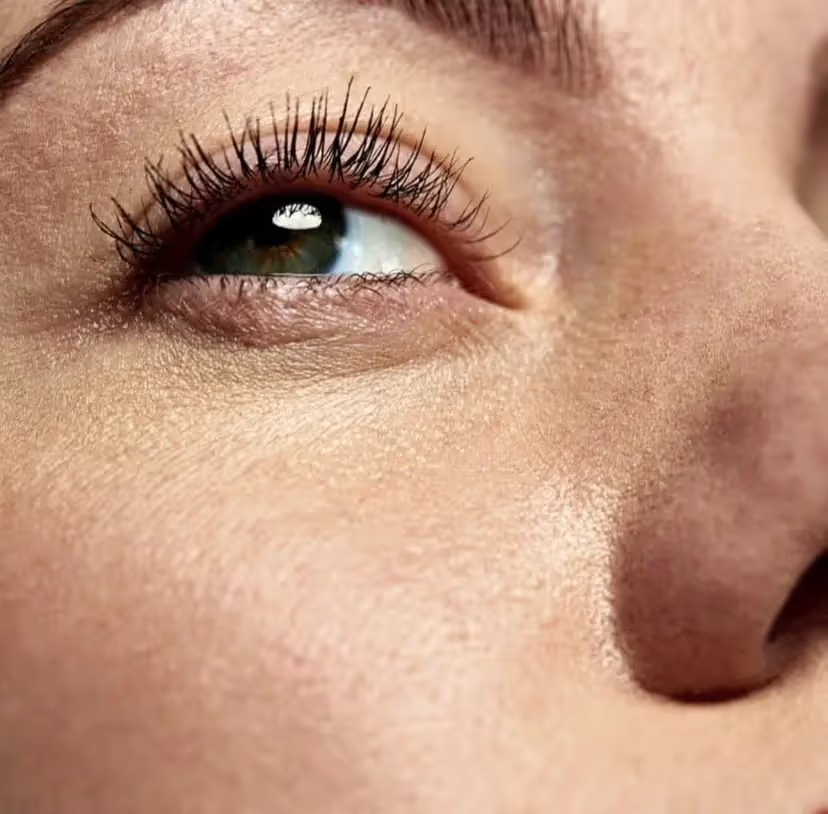
Øyeproduktet er for eksempel et flott alternativ til “tear trough" behandling med fillere, bidrar til å redusere mørke ringer under øyne, forbedrer rynker rundt øynene, hydrerer huden og bedrer sirkulasjonen.
Hvem er produktet egnet for?
Nucleadyn er utmerket for deg som er i 40- og 50-årene, da det regenererer slapp og dehydrert hud og gjør vevet tykkere.
Hvis du er bekymret for tørrhet, slapp hud, fine linjer, rynker under øynene og mørke ringer, er Nucleadyn vel verdt å vurdere. Det er et spesielt verdifullt alternativ til pasienter som kan ha opplevd lett hevelser med fillere.
Hvor lenge varer behandlingen?
Nucleadyn injiseres i huden med en nål eller kanyle i to økter med to til tre ukers mellomrom. Det anbefales en vedlikeholdsdose mellom 6-12 måneder.
Nucleadyn gir mer subtile forbedringer til huden. Målet med enhver injiserbar behandling er at man ser ut som en bedre utgave av seg selv, uten at man skal se behandlet ut. Med klassiske fillere gjenoppretter man tapt volum, og det er viktig å injisere på rette steder der man anatomisk mister volum, for å bygge opp igjen tapt volum. Samtidig kan det ved overbruk gi et overbehandlet utseende og bli tydelig at man har gjort noe. Nucleadyn derimot har fokus på forbedring uten å gjøre vesentlige endringer i ansiktet. Det er ikke en filler, det er ikke en skinbooster - det er en biostimulator for hudforyngelse og beskyttelse.

Hvordan sammenlikner man denne behandlingen med fillere og profhilo?
I stedet for å tilføre hyaluronsyre til huden, som Profhilo og fillere gjør, inneholder Nucleadyn polynukleotid baserte biostimulerende geler for å bidra til å øke egenproduksjonen av kollagen, hyaluronsyre og andre essensielle proteiner. Det er ikke så volumgivende som filler, men det er en behandling som gir et veldig naturlig utseende og gir struktur til huden samtidig som den er dypt hydrerende.
Hva er forskjellen på nucleadyn og fillere?
Nucledyn virker på hudkvaliteten og brukes til pasienter som er opptatt av fine linjer og rynker og tap av elastisitet i ansikt eller hals.
Fillere er derimot mer egnet for de med volumtap, eller de som ønsker å gjenopprette definisjonen eller volumsøkning i visse områder. F.eks volumtap i tinning eller kinn, og brukes til konturering av kinnbein eller kjeve. Nucleadyn gir en forbedring av selve huden, samtidig som den stimulerer kollagenproduksjonen og jevner ut linjer og rynker og har en hydrerende effekt.
Nyceladyn kan ikke sammenlignes med vanlig filler og kan heller ikke gjenopprette volumtap på samme måte som en filler.
Nucleadyn vs. Profhilo, hva er forskjellen?
Hovedingrediensen i Profhilo er ren konsentrert hyaluronsyre mens Nucleadyn er en biostimulerende gel laget av polynukleotider.
Hyaluronsyre (HA) er en naturlig forekommende forbindelse som finnes i hud, muskler og ledd. Evnen til HA til å binde seg til vannmolekyler og HA til å trekke opp til 1000 ganger sin vekt i vann, gjør Profhilo ideell for å gi utmerket fuktighet til huden. Den høye konsentrasjonen av ren HA i Profhilo stimulerer også til bioremodellering ved å indusere kroppens naturlige helbredende respons for å øke kollagen og elastin ved å stimulere fibroblastceller, forbedre hudens struktur, elastisitet og fasthet.
Mens Nucleadyn også er i stand til å binde seg til vann for å gi dyp hydrering til huden, trekker ikke Nucleadyn inn så mye vann som Profhilo. Dermed kan Nucleadyn være mer egnet for områder i ansiktet med tynnere hud der overdreven vannretensjon er uønsket, som f.eks under øynene.
I motsetning til Profhilo, er Nucleadyn en biostimulator som er i stand til å aktivere fibroblastceller til type 1 kollagen og elastinproduserende myofibroblaster ved direkte å stimulere spesifikke reseptorer på fibroblastcellene. Man oppnår bioregenerering og foryngelse av huden på grunn av vedvarende og økt produksjon av kollagen av myofibroblaster. Resultater for Nucleadyn varer også vanligvis lenger enn Profhilo.
Oppsummert, på grunn av den intense fuktighetsgivende effekten fra Profhilo, har Profhilo en tendens til å gi en bedre glød. Disse to behandlingene er kompatible med hverandre og kan kombineres for bedre resultater.
Hvis du ønsker å lære mer om våre ulike behandlingsalternativer og finne ut hvilke som passer for din hud, ta kontakt så veileder vi deg til den behandling som passer deg best. For en lignende hybridbehandling med umiddelbar løfteeffekt, se vår guide til HArmonyCa.
Men mitt aller beste tips for våren og sommeren er å huske solkrem. Her kommer det også nyheter vi vil presentere senere.
Av Kristin Solheim, Nordstrandklinikken
Populære innlegg
Her finner du flere nyheter fra oss.

Bestill konsultasjon eller ta kontakt med oss
Konsultasjon kirurgi og energibaserte behandlinger
Time til laser‑ og kosmetiske behandlinger
Ta kontakt med oss

Adresse

E-post

Telefon

Åpningstider
Kvelder etter avtale